

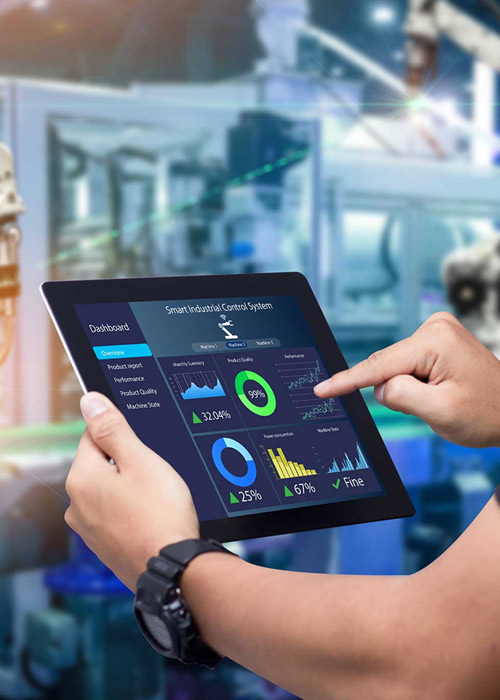
In today’s data-driven world, smart utility monitoring systems are revolutionizing how businesses manage their energy and resource consumption. By integrating cutting-edge technologies like IoT, AI, and advanced analytics, these systems empower organizations to optimize utility usage, enhance product efficiency, and reduce operational costs.
One of the largest bio-glycol manufacturing companies wanted to leverage the power of industrial IoT and harness it to improve product efficiency and utility monitoring. Now the main challenge was implementing industrial digitization for a brownfield scenario. The plant had diverse Distributed Control Systems and Programmable Logic Controllers with multiple OEMs. Below are the challenges which the organization wanted to overcome. 1) Data Centralization and Consolidation, OT Network Security. 2) Optimization of heat transfer – Monitor air preheater pressure drop. 3) Real-time boiler performance.



Our Industrial process experts found solution options to integrate the legacy DCS system and DCS-DCS-PLC communication to ensure smoother, efficient transactions. Carbynetech devised a data acquisition strategy and created a highly scalable OPC server over a virtual network. Splunk was chosen as a big data platform to ingest machine data and build the intelligent digital on this system.
The OPC software used for this particular assessment was Kepware. The dashboard had given a real-time view of an integrated real-time boiler management system consolidating the individual control system of units. The analytics were into Boiler, which included Mass and energy balance, Fouling diagnostics, Fuel and emission diagnostics and action-oriented messages for the shift managers.

Integrated online boilers and turbine monitoring

Improved visibility and transparency

Improvement in boiler efficiency by 1.5% in the last 3 months

4% energy saving opportunity per month


The solution paved the way for the organization to leverage the power of smart digital transformations. Automated smart critical parametric alerts were configured. This enabled the department stakeholders to monitor and manage the operations efficiently and with less human intervention.